
Self-Employed Persons
Charting your own path in the arts? Find the resources, grants and support to help you build a sustainable creative career.
Last updated on 23 September 2026
What is it like to work as a Self-Employed Person in the arts sector?
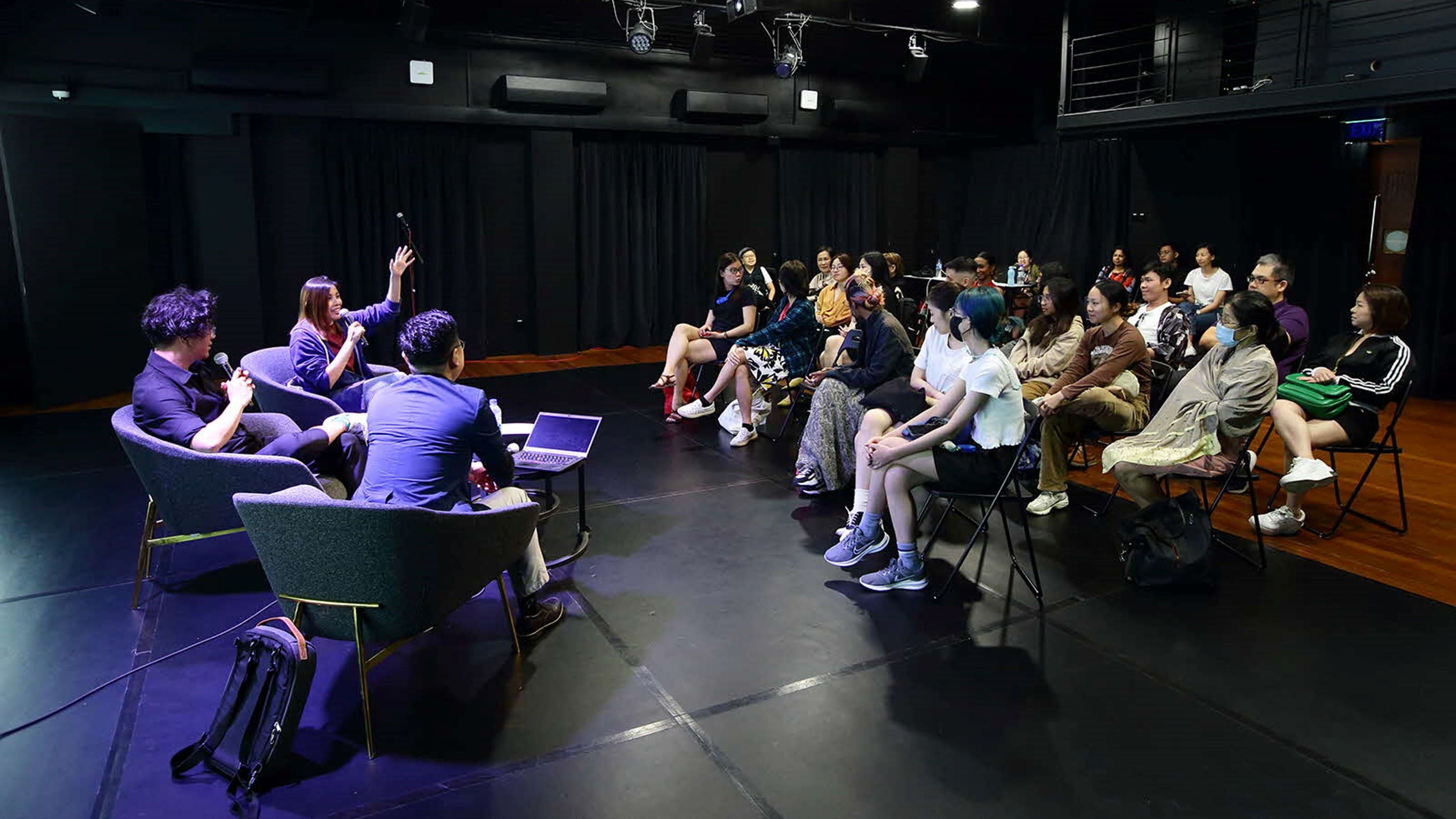
Roughly one in three arts professionals work as Self-Employed Persons (SEPs) — a notably higher rate than the national average of under one in five. For many in the arts and broader creative industries, gig work is their primary source of income, and this trend is likely to grow alongside the expanding gig economy.
Being an SEP means taking on both the freedom and the responsibility of steering one's own career in a direction that fits personal interests and professional goals. Key advantages include a flexible schedule, the option to work remotely, and exposure to a diverse range of projects. For creatives in particular, this flexibility opens doors to collaborations with other artists. SEPs may also enjoy greater earning potential, since they can set their own rates and take on as many clients as they're able to handle.
On the flip side, SEPs face income volatility and less job security. They also miss out on standard employee perks like employer-funded training, paid leave, and medical benefits, and must independently manage their own insurance and retirement planning. To help SEPs tap into new opportunities, build sustainable careers, and develop greater self-reliance, NAC launched the Arts Resource Hub.
What key skills would Self-Employed Persons need?
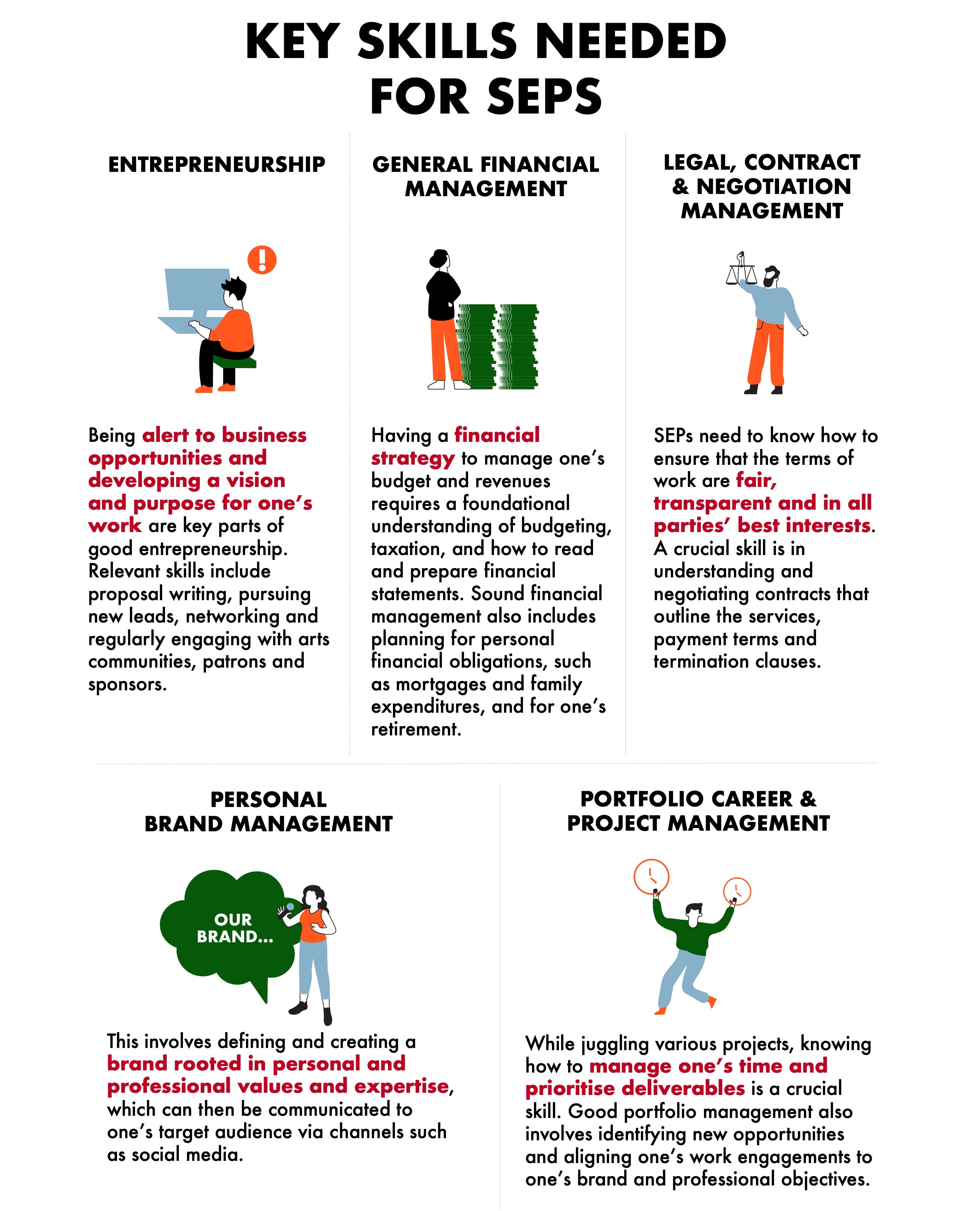
Self-Employed Persons (SEPs) operate as mini-enterprises and would need unique skillsets to help them manage their own business. They need to be self-starters and have enterprising skills and attitudes to succeed. Competence in business operations such as finance, and branding is also critical. Basic legal knowledge, including contract negotiation, is also needed to protect their work and rights. SEPs must adapt to changes and new market segments to have sustainable careers. This makes upskilling — by continuing to learn new skills and refining existing ones — crucial to help SEPs remain competitive and relevant.
Below is an infographic summarising the key skills needed for SEPs:
Arts Resoure Hub is on Telegram! Get on-the-go updates from us - simply subscribe to our channel @ https://go.gov.sg/arhtelegram (opens in new tab)
For more information on skills, please refer to the following:
Skills Framework for Arts (Arts Education) [PDF, 2.35 MB] (opens in new tab)
Skills Framework for Arts (Technical Theatre and Production) [PDF, 3.69 MB] (opens in new tab)
Explore arts careers in Singapore
Arts Educators
Whether as an educator, teaching artist or researcher, discover opportunities and resources to grow your practice and contribute to arts learning and participation in Singapore.
Production Design
Bring ideas to life behind the scenes through careers in production design, where creativity, collaboration and technical expertise come together to shape memorable experiences across stage, screen and other creative platforms.
Technical and Specialist Services
Explore opportunities in technical and specialist services, supporting productions behind the scenes through expertise in lighting, sound, multimedia, stage operations and production management.
Did you know?
The NAC Capability Development grant supports arts practitioners in enhancing their professional capabilities through local and international learning opportunities. This grant provides up to 80% funding support for a range of development activities including training courses, mentorships, conferences, workshops, and overseas attachments that contribute to artistic excellence and arts management skills.